
We’ll go through the basics here to help you figure out how to improve your home’s security with the least effort and cost. These are tips that will apply to most people in most situations, and everyone should seriously consider taking the steps suggested here.
Doors
Lock it up!
The easiest way to keep people out of your house? Lock the door. It seems simple, but so many people just don’t do it reliably. I personally have had people go up to my front door at 3 a.m. and try to walk right in; the only thing that stopped them was the lock. Lock the door. That will at least keep out the curious and confused.
But don’t stop at just locking it—make sure the door actually locks. Yes, actually go outside and make sure each entrance is solidly locked and can’t be jiggled open or whatever.
You may be surprised to learn that many locked doors can be opened in just a few seconds with nothing but a credit card—here’s a video showing exactly how to do this and why it’s possible. Basically, this can be done due to either the lack of a “deadlatch” on the lock, or improper installation of one (which even “professionals” get this wrong all the time). Try it out! Not only is it a neat party trick, but it will also let you know if you need to call a locksmith. You could just try to realign the strike plate yourself to make sure that the deadlatch plunger stays pushed in when the door is closed, but if you’re not sure what you’re doing, it doesn’t hurt to call in a professional.
Alternatively, you can avoid the issue altogether by installing a deadbolt. No credit card can push one open. It should have a keyhole on the outside so that you can leave it locked while you’re gone, and you’ll need to make sure that it’s installed properly and isn’t so cheap that it can be picked with a paperclip. We’ll also talk about “smart” deadbolts later. (LINK)
But what if you rent?
If you rent your home, you obviously can’t just change or add locks willy-nilly. But it doesn’t hurt to ask! Especially if you can prove how insecure it is. If they’re unwilling to do anything, you could even ask if you could do it yourself (at your own expense) and just give them a copy of the keys.
If they still won’t budge, then you could look into devices that don’t modify the unit, such as an Addalock or door bar that props against the floor (just the first result on Amazon). However, these only work while everyone is home. Your best option might be to at least try moving the strike plate slightly or something to fix issues with improper deadlatch installation (if your door lock even has a deadlatch). Or potentially take matters into your own hands and just install a better lock anyway, if you’re not concerned about your landlord finding out and evicting you for breaching the lease. I’ll let you be the judge of that.
…And throw away the key!
If your locks came with the house, you may wish to change them out (or have them rekeyed) in case the previous owner(s) gave out spare keys (or kept them for themselves). For renters, many jurisdictions require landlords to rekey all locks between tenants (though it’s unclear how to know for sure if that was done).
Oh, and make sure you’re not just putting a spare key under the door mat either.
Peepholes and doorbell cameras
Don’t bother with those little door chains that can only be locked/unlocked from inside. For one, they’re only useful when you’re home (i.e. when you’re less likely to be burgled), and for two, because a thin chain and a couple of screws aren’t actually going to stop someone from kicking down your door. If you want a way to see people at the door without opening it fully, just get a peephole or a doorbell camera. Though personally, I trust the low-tech solution more than the high-tech one, since things like cameras and apps are prone to failure. If you want a doorbell camera to be able to check the door remotely, that’s fine, but still consider getting a peephole too. By the way, we talk more about doorbell cameras in this article.
If you’re renting, or can’t install a peephole/doorbell camera for some other reason, you could also consider just placing a regular camera outside (no screws or wiring needed, in some cases), or just try looking through a window to see who’s outside. Pretty much anything is better than just blindly opening the door when you have no idea who is on the other side of it.
Foiling door-kickers
If you’re worried about someone kicking in your door (which you should be; it’s usually quieter and easier than breaking in through a locked window), then consider installing a more secure base plate for your locks. Even with a deadbolt, if the only thing keeping it in the door frame is half an inch of wood and/or a flimsy piece of thin metal, kicking your door in will be relatively easy. Make it harder by getting a large, solid strike plate that screws into your frame at multiple locations. The plate should preferably be at least 8 inches tall; the taller the better. Make sure the screws go at least 2-3 inches deep (through the frame and into the stud).
Ideally, you’ll also have similarly deep screws for your hinges (screwing both into the frame and into the door). And if your hinges happen to be on the outside instead of the building (common in hurricane-prone regions), replace some of the screws with security studs/pins so that an invader can’t simply remove the hinge pins and pull the entire door out of the frame. Optionally, you can get hinges with the security studs built-in.
And this should go without saying, but you’ll obviously want your exterior doors to be sturdy and solid, rather than hollow-core. Even a well-placed punch (yes, with a bare human fist) can get through many hollow-core doors. If it feels really light, you might want to do some investigation!
Glass doors
If you have sliding glass doors, make sure they can’t simply be pushed up and sideways (in the direction the door slides open) from outside to “unhook” the latch (go outside and try it yourself). This is common for sliding door locks where a hook flips down and out of the door to latch onto the inside of the frame. Here’s a video showing how to do this with a screwdriver for leverage, though you can also pull this off by just pulling up and sideways on the handle directly, or by pushing up and sideways on the glass.
If you can open the door by lifting it, then there are a couple of options for fixing it:
- If you have one, screw in the security pin at the base of the door (which locks the door to the frame), OR
- Place a dowel in the frame to block the door from opening entirely (and remove it when you want to open the door), OR
- Install a block of wood (or even just some screws) in the gap between the top of the door and the door frame so that the door can’t be pushed up. Here’s a video that shows how to do this: Prevent Lift Up of Sliding Glass Doors
Also note that it may be possible to open the door even if the hook flips upward instead of downward; try raising up the side opposite the lock (either by using a screwdriver, or by pushing up on the glass), so as to lower the lock side slightly, and then try to slide open the door.
In some cases, you can even open the door by sliding a thin object into the hook to make it retract back into the door (similar to how the credit card trick works on regular doors). If this is possible on your door, you can prevent this by using the security pin or dowel methods described above, or by installing a metal plate in front of the door that blocks objects from being shoved in.
And whether you have sliding glass doors, or just regular doors that contain glass, see the Windows section below for how to secure both types further.
Garage doors

Similar to regular doors, the most basic of security tips is to just leave your garage door closed at all times (even when you’re home). A closed door will discourage opportunists from casually walking away with your tools, bike, etc., and it will also help keep animals and neighborhood kids out (especially important if you keep dangerous chemicals or tools inside). Keeping it closed is even more important if your garage is directly connected to your home, as that interior door may not be quite as hardened as other exterior doors. As a side note, you should keep the door between your home and your garage locked whenever possible, because opening garage doors from outside is actually surprisingly easy.
Windows
Get some curtains!
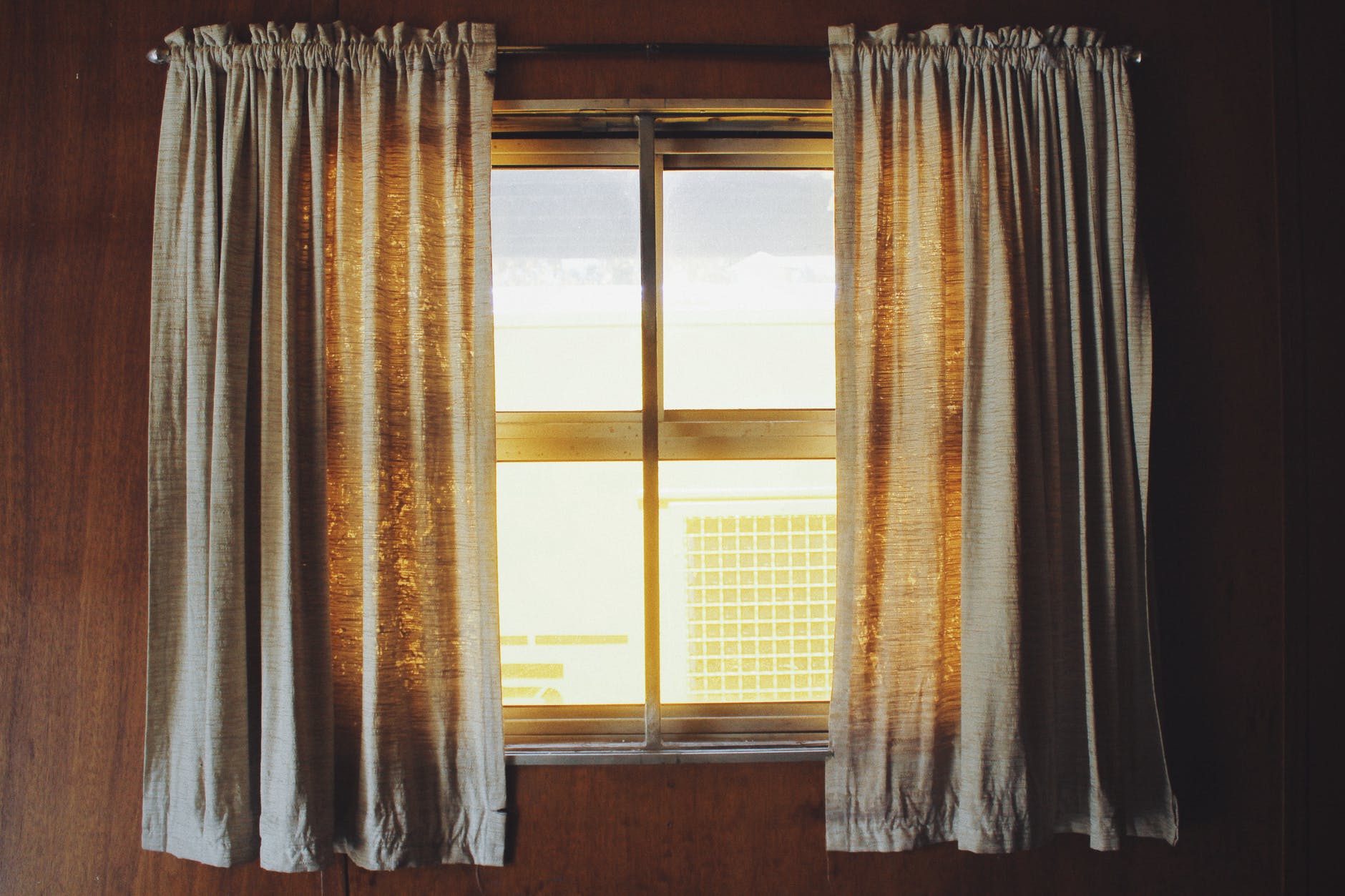
All first- and second-story windows (and doors with glass) should have curtains or frosting (e.g. stick-on frosted plastic sheets, or just parchment paper if you’re on a budget) to prevent passersby and yard prowlers from seeing what stuff you have and whether anyone is home to stop them from taking it. Make sure that the curtains/frosting actually prevent all vision, even when it’s dark outside and light inside (which often makes it easier to see inside). Yes, actually go outside and try it. A little bit of light shining through is ok as long as you can’t actually make out anything specific.
This will prevent would-be thieves from easily seeing if people are home, and what kind of valuables you have (e.g. a big TV).
Just remember that if they can’t see in, then you probably can’t see out. With frosted glass, you won’t be able to just look out the window to, for example, see what a loud noise outside was; you’ll have to actually open it (if possible) or rely on cameras.
Lock the windows too, of course!
Next, you’ll want to add some protection to all easily-accessible windows. The most basic protection is something to prevent a thief from simply pushing/prying the window open from outside. This is the ideal entry method for them (as opposed to shattering the glass) since it’s fast, quiet, and has little risk of injury. There are two main methods here:
- Locks. These are often built into the window and are easy to engage/disengage. Locks can be set to either prevent a window from opening entirely, or prevent a window from being opened past a certain point (e.g. no more than an inch or two).
- Can be sash locks, deadbolts, etc.
- Dowels in each frame. Removing and inserting them is less convenient than locks, but a strong dowel is much more reliable. Some locks might not engage properly in some cases, and even when they do, they can often be broken if the intruder applies enough force (e.g. via a crowbar).
For dowels, as well as some types of locks, you can size/place them such that you can keep a window open slightly (e.g. 1-2 inches) for ventilation, but with a gap small enough to prevent anyone from reaching inside (either to remove the dowel, unlock the window, or grab something small that happens to be near the window, e.g. a laptop on a desk). If you often keep your windows open slightly, then dowels/locks that allow this will be very convenient because you never have to remove/unlock them—which means you can never forget to replace/lock them.
However, even a small gap allows an intruder to insert a prybar and destroy most locks, so a dowel is generally a much better choice if you plan to leave your windows ajar.
Order of operations for securing windows
When it comes to hardening your windows, focus on these first, in order of priority:
- Ground-floor and basement windows, including small windows (unless they are so small that even a child could not fit through)
- Windows that are otherwise easily accessible (e.g. via a ground-connected deck or by climbing a nearby object, e.g. garbage can, car, tree, etc.)
- Windows that are accessible from a deck or roof, if the deck/roof is easy to climb up to (again, via car, tree, etc.)
- Second-floor windows, since criminals are allowed to carry ladders.
Within each category, you should start with windows that are less visible to the street and neighbors, (e.g. backyard windows) as intruders will often try them first (since being seen entering a house via a window is pretty darn suspicious). Then continue down the list, until either you got them all, or your budget/patience has run out.
Oh, and if you have any window AC units, either remove them, or harden them so that they can’t be easily removed (e.g. bolting the AC unit and spacers to the frame and window so that none of it can be removed and the window can’t be opened further).
Deterrents

Making your house harder to break into is all well and good, but wouldn’t it be great if you could just prevent burglars from even attempting to break in in the first place? Indeed, that is the purpose of deterrents; they let you actively advertise that your house isn’t worth breaking into! Here are some examples:
- Outdoor lights (either always-on or motion-activated) so that there’s no shadows to hide in
- Cameras
- Dogs
- Visible alarm system components
- Signs/stickers that advertise cameras, dogs, alarm systems, etc.
- Spiky plants in front of your windows, such as roses or blackberry bushes
- Anything that makes it appear that someone is home, e.g. indoor lights, car parked out front, TV/FakeTV being on, etc.
- Most burglars do not want a confrontation and will generally target houses that are unoccupied.
Fences can go either way, depending on the fence. If a fence blocks the view from the street and neighbors, then it actually helps conceal the burglary. But if it’s difficult enough to climb (and there is a locked gate or similar), then the burglar may not want to bother. For these reasons, a tall wrought-iron fence (preferably with sharp points on top) is probably a good bet; it’s not trivial to climb, and won’t help the burglar hide from the neighbors while breaking in.
Conclusion
I hope these tips help you think about ways that you can improve your home’s security! And remember, you don’t need to do everything at once, or even ever. You have to draw the line somewhere, after all. But I do think these tips provide a decent baseline level of security, so I hope you’ll consider working your way through them.
 The Readyist